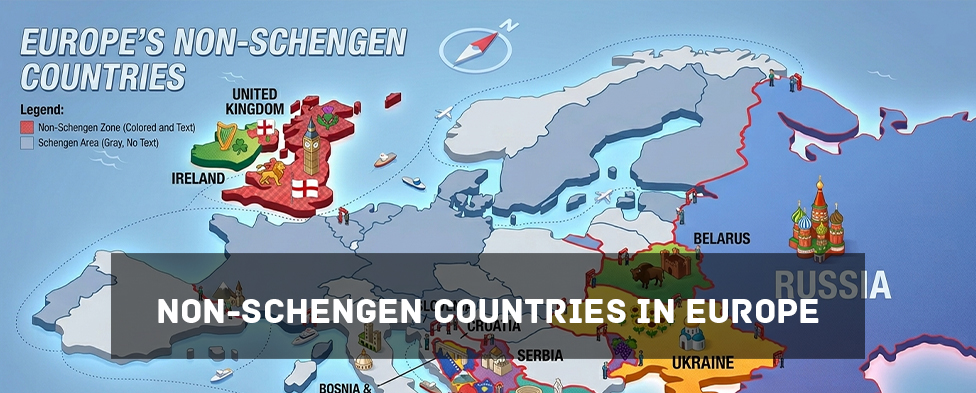
Navigating the European and Schengen regions is quite complicated because of the tricky geography. The Schengen agreement gives freedom to access its countries, but not every European country is a member. This is what confuses the travelers the most, especially in the UK.
Through this guide, understand which countries come under the 27 EU countries, the 29 Schengen countries, and the non-Schengen countries in Europe. A better understanding of the Schengen region and the EU will help you navigate the visa and other travel requirements as well, and make your next trip to any of the regions smoother and stress-free. Also, get to know how you can secure a Schengen visa from the UK with professionals!
*We will confirm you through email when the appointment will be fixed.
The Schengen region is the result of a European project that started in 1985, which included five EU countries. France, Germany, Belgium, The Netherlands, and Luxembourg.
The Schengen area was named after a small village in Luxembourg, where the Schengen agreement and Schengen convention were signed in 1985 and 1990. These agreements led to the formation of the Schengen region (Schengen area).
Countries under the Schengen zone – This region covers over 4 million square kilometers, with around 450 million people, and includes 29 countries. Out of these 29, 25 are the EU states, and the remaining 4 are members of the European Free Trade Association (Iceland, Liechtenstein, Norway, and Switzerland). Recently, as of 1 January 2025, Bulgaria and Romania are part of the Schengen area.

The European Union is an international organization that comprises European countries and governs common social, economic, and other policies for them. This region was formed by the Maastricht Treaty, which was meant to enhance the integration and cooperation among these countries.

There are currently 27 countries in the EU, out of which 25 come under the Schengen region.
EU countries are: Austria, Belgium, Bulgaria, Croatia, Cyprus, the Czech Republic, Denmark, Estonia, Finland, France, Germany, Greece, Hungary, Ireland, Italy, Latvia, Lithuania, Luxembourg, Malta, the Netherlands, Poland, Portugal, Romania, Slovakia, Slovenia, Spain, and Sweden.
Ireland and Cyprus are the two non-Schengen countries in Europe that are not part of the Schengen zone. As of now, Cyprus is in the process of implementing the Schengen policies and planning to fully integrate into the zone.
| Pro Tip: UK travellers have to apply for the Cyprus visa as per the rules in order to visit there for a specific period. |
NO. The United Kingdom has never been a member of the Schengen region and never signed the agreement to be part of it. It was part of the European Union, and furthermore, due to Brexit, as of January 31st, 2020, the UK is no longer part of the EU.
Since it was part of the EU, the Schengen region has exempted its travellers a bit from visa requirements. As per Schengen rules, UK citizens are exempt from the need for a Schengen visa in order to stay in the country for a short period (up to 90 days within a 180-day period).
But UK residents (non-EU nationals) have to apply for a visa in order to have a short stay and a long stay in the Schengen countries. In contrast, UK citizens only require a long-stay visa. So, are you planning to visit any Schengen country in the next few months? Then apply for your SCHENGEN VISA here!
You may also like: Transit visa from UK: Schengen airport transit rules explained
While the Schengen Area is closely linked to the European Union. There are also four non-EU countries that are members of the Schengen Zone.
They are – Switzerland, Liechtenstein, Norway, and Iceland! These four countries are part of the European Free Trade Association (EFTA).
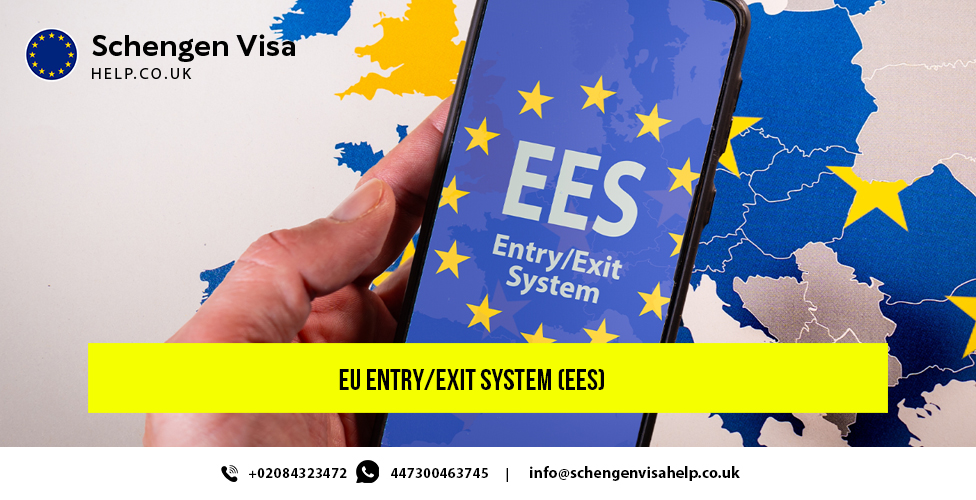
As of April 10, 2026, the EU’s new travel system, EES (Entry/Exit System), has been implemented across the Schengen zone. This will be a digital travel authorisation, in which travelers have to provide biometric data at the border, and the manual passport stamping will be discontinued.
However, all UK travelers (UK citizens as well as residents) have to register under EES while entering the Schengen region. This data will be stored securely for three years.
Submit the Form:
Fill in the Schengen visa application form completely and don’t leave any category blank. Make sure to put the right information and avoid making errors in the form. Submit the filled form by paying the service charges.
Get appointment booked:
After receiving your details, our visa experts will book your Schengen visa appointment from the UK. Your slot will be booked in just 2-3 days, and you will be assisted with further processing.
Verification & biometrics:
Visit the centre and submit your required documents. Your document verification will be done, biometrics will be registered, and you will be asked some questions as well. Don’t hesitate and answer the questions confidently & honestly.
Visa processing:
After verifications, your Schengen visa will be processed within two weeks, and you will receive your visa along with your passport.
You may also like: Schengen Visa Sponsorship Letter Sample for UK Residents
In conclusion, understanding the European region and travel patterns can be tricky and requires proper knowledge. That’s only when it will not be confused with the Schengen zone. By navigating the regions and understanding the travel rules, you can easily visit the Schengen countries or non-Schengen countries as per your travel plan.
If you are planning your visit to a Schengen country from the UK, then make sure to understand the visa eligibility and apply for the visa as per the given process.
*We will confirm you through email when the appointment will be fixed.
No. You must apply for a visa there and meet their visa requirements to enter a non-Schengen country.
Finland and Estonia are countries with high approval rates. Finland’s visa application system has the most affordable Schengen visa process, while Estonia offers a smooth process that is good for first-time applicants.
The normal processing time for a visa application is 15 days. This period may be extended to up to 45 days if a more detailed examination of the application and/or additional documents are required.
British citizens do not require a visa for the Schengen Member States, if the duration of their stay does not exceed 90 days within any 180-day period.

 7300-463-745
 02084-323-472